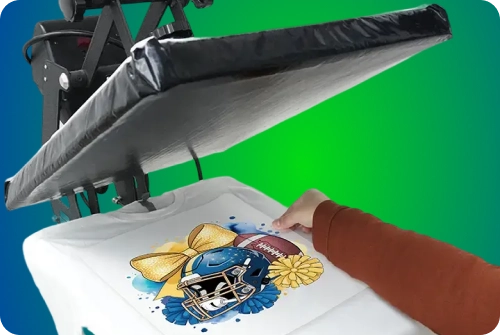
If you are new to dtf transfers ready to press, think of them as preprinted film sheets you apply with a heat press to get bright, durable designs on t-shirts, hoodies, and more, without weeding vinyl or burning screens.
Introduction
If you have ever tried to “wing it” with transfers, you already know how it goes. The press feels hot, the timer beeps, you peel… and one corner lifts like it’s trying to escape. That is not bad luck. It is almost always temperature, pressure, or peel timing.
For small businesses and home creators, dtf transfers ready to press are a practical answer when you want full color designs without ink mixing, screen setup, or buying a full DTF printer. You upload artwork, pick sizing or a gang sheet, and your transfers arrive ready to apply.
This guide keeps it beginner-friendly, but it does not baby you. You will get a clear process, a temperature table, and the habits that help your prints survive real life.
What Are DTF Transfers Ready to Press?
A DTF Transfer is a design printed onto a coated film using DTF inks, then covered with hot-melt adhesive powder and cured so it is ready to press onto fabric with heat and pressure.
When people say dtf transfers ready to press, they mean the transfers arrive printed, cured, and sized. Your job is pressing, peeling, and finishing.
Why Choose DTF Transfers Ready to Press?
DTF ready to press transfers keep your workflow simple. You can offer pro-level prints without owning a printer, powder system, and curing setup. You can also sell small runs without paying screen setup costs every time a customer changes their mind.
DTF also handles detail well. Gradients, tiny text, and full color designs are normal. That makes it a strong option for events, teams, small brands, and creators who want variety without headaches.
The Market for Custom DTF Transfers
Demand for custom dtf transfers ready to press keeps growing because customers want fast, personalized apparel. Birthdays, reunions, pop-up brands, small teams, staff shirts, holiday drops, all of it. DTF fits that reality because you can press on demand and keep moving.
A business that stays consistent on quality usually wins on repeat orders. People forget what you promised on launch day. They remember the print that still looks clean after a few washes.
DTF Transfers Ready to Press Wholesale
If you press every day or handle bulk orders, dtf transfers ready to press wholesale helps you scale. You can order gang sheets with multiple designs, press when blanks arrive, and keep your schedule flexible.
Wholesale makes the most sense when your bottleneck is time, not demand. If you are constantly printing late at night to catch up, that is usually your sign to outsource the printing portion and keep your focus on production flow and customer support.
How to Apply DTF Transfers Ready to Press
Applying dtf transfers ready to press comes down to three basics: the right DTF Transfers Temperature, the right pressure, and the right peel. Your supplier’s specs always win, but the workflow below is a reliable baseline.
One safety note before you start: heat presses are not “kind of hot.” They can burn you fast. Keep sleeves, cords, and hands where they belong, and do not rush the close.
Step-by-Step Application
- Preheat the press and let it stabilize for a few minutes (most presses drift while warming up).
- Pre-press the garment for 3 to 5 seconds to flatten seams, drive off moisture, and stop “steam bubbles.”
- Place the transfer (ink side down) and smooth it flat so it sits clean, no wrinkles, no lifted corners.
- Press with consistent pressure for the recommended time.
- Peel based on the film type (cold peel is the safe default when you are learning).
- Finish press for a few seconds with parchment or a finishing sheet.
That last step is where beginners level up. The finish press often improves durability and reduces the “plastic edge” look that makes a print feel cheap.
DTF Pressing Instructions
Use this chart as a starting point for dtf printing instructions. Always test new blanks because polyester blends, performance fabrics, and different press types can behave differently.
| Fabric type | DTF Transfers Temperature (°F) | Time (seconds) | Pressure | Peel type |
| Cotton | 300–320 | 10–15 | Medium to firm | Warm or cold |
| Cotton blend | 290–310 | 10–15 | Medium | Warm or cold |
| Polyester | 275–300 | 8–12 | Medium | Cold |
| Heavy hoodies | 305–320 | 12–15 | Firm | Cold |
Common Mistakes to Avoid
- Pressing at the wrong DTF Transfers Temperature and then chasing “fixes” that never hold
- Using an iron and expecting the same heat and pressure consistency
- Peeling too early because you are in a rush
- Skipping the finish press and wondering why wash life is inconsistent
- Guessing sizing instead of using a repeatable method (this is where DTF Transfer Sizing and DTF Transfers Temperature work together)
Benefits of Using DTF Transfers Ready to Press
The biggest win with dtf transfers ready to press is flexibility. You can take custom orders, switch designs fast, and keep production moving without building a full print department.
Here are the benefits most businesses notice first:
- Full color designs with sharp detail on light and dark apparel.
- No weeding, so you save time and reduce mess.
- Easy application for small runs and last-minute orders.
- You can offer custom dtf transfers ready to press in many sizes, from left chest to full front.
- Outsourcing transfers can keep your margins steadier when order volume spikes.
Don’t Forget the Hidden Time Costs
Most guides talk about pressing. They skip the part that actually eats your day.
Hidden cost #1 is testing. Each new blank brand can require small changes in heat, pressure, and peel timing. Hidden cost #2 is rework. One lifted edge on a 30-shirt run can turn into an hour of extra labor, plus a customer who is suddenly watching every detail.
Also, your press can lie. Some presses run hotter in the middle or cooler on the edges. If you want to sanity-check it, use a heat strip now and then, or spot-check with a temp gun. You are not being obsessive. You are being consistent.
A simple “real-life” rule: plan your workflow around the slowest part, not the coolest part. That might be trimming threads, folding, bagging, or customer pickup coordination, not pressing.
How to Care for DTF Transfers on Fabric
Good care keeps dtf transfers ready to press looking sharp. Most suppliers recommend waiting 24 hours before the first wash, then washing inside out and avoiding high heat.
If you sell apparel, your care guidance should match how care instructions are treated in the U.S. That is why the FTC’s Care Labeling Rule guidance is worth knowing. It gets specific about instructions, warnings, and having a reasonable basis for what you tell customers.
For durability language, it helps to understand how textiles are tested. The AATCC Manual of International Test Methods and Procedures is the industry backbone for a lot of laundering and performance evaluation standards. You do not need to quote test numbers in your listings, but knowing these standards exist keeps your claims grounded.
And if you want a research-based example that touches wash resistance and adhesion in a thermal transfer context, this PubMed-indexed study on thermal transfer printed textiles is a solid reference point for how durability gets evaluated in practice.
Key Tips for Washing DTF Transfers
Use this as your quick DTF Washing Instructions checklist.
- Wait at least 24 hours before washing
- Turn garments inside out
- Wash cold or cool on a gentle cycle
- Use mild detergent, skip bleach and harsh additives
- Tumble dry low or hang dry for best long-term results
- Avoid ironing directly on the design (iron inside out if needed)
If customers complain about cracking, it is often heat. Too much dryer heat, too hot of an iron, or press settings that were “close enough” on day one.
Where to Buy High-Quality DTF Transfers Ready to Press
If you want dtf transfers ready to press wholesale with consistent print quality, look for a provider that gives clear dtf printing instructions, transparent turnaround times, and support that answers questions like a human.
A good partner also makes it easy to order by size, upload files cleanly, and choose gang sheet options without confusion. If your business model depends on pressing quickly, that convenience is not “nice to have.” It is what keeps your days predictable.
When it fits your site flow, point customers to your internal pages for DTF Transfer, DTF Washing Instructions, and DTF Transfers Temperature so they can press with confidence and you can cut down on repeat support messages.
Conclusion
dtf transfers ready to press give decorators a simple, scalable way to offer full color prints without owning every piece of equipment. When you follow consistent dtf printing instructions, use the right DTF Transfers Temperature, and share clear care guidance, your shirts look good and keep looking good.
Start with small batches, get your press dialed in, then scale into bigger orders with dtf transfers ready to press wholesale once your process feels steady. The goal is not just pressing. The goal is fewer remakes, fewer surprises, and happier repeat customers.
FAQ
What’s the difference between hot peel and cold peel DTF film?
Hot peel film lets you peel the carrier right after you press dtf transfers, while cold peel film needs a short cool down. Hot peel speeds up production, but cold peel often gives smoother prints with less risk of cracking. Follow your film’s directions so the dtf heat transfer bonds cleanly.
What fabrics work best with DTF transfers?
Most DTF transfers work well on cotton, blends, and many polyester garments. Always test new blanks, especially performance fabrics, treated fabrics, or anything with a slick surface.
Are DTF transfers better than screen printing?
For detailed full color art and small runs, dtf ready to press transfers usually win on flexibility and setup time. For huge runs of simple designs, screen printing can still win on cost per print. Many businesses use both.
Leave a Reply