UV DTF VS DTF: What Are the Differences?
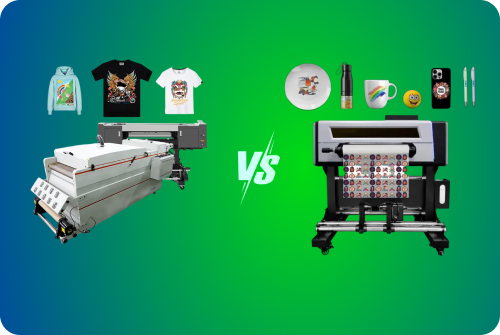
A clear way to decide between dtf and uv processes is to match each process to your substrate, run size, and finish requirements.
Introduction
Choosing the right method in the printing industry saves time, reduces scrap, and keeps customers returning. This guide breaks down uv dtf vs dtf transfers with practical details you can use on the floor today. You will find use cases, pros and cons, and a fast summary for quick quoting.
Quick overview
- DTF printing places water based color on dtf film, fuses adhesive powder, and uses a heat press to transfer to fabric.
- UV DTF printing jets uv inks on uv dtf film and cures with uv light to create a sticker like transfer for hard goods.
What Is DTF (Direct-to-Film) Printing?
A dtf printer uses a textile first process. You print color and white ink onto pet film, dust with adhesive powder, cure in a curing oven, then press to fabric.
- Works on cotton polyester and blends, including dark fabrics.
- Uses water based pigment inks and a thermal adhesive for bond.
- Delivers flexible dtf prints with a soft print feel when dialed in.
DTF suits runs of tees, t shirts , hoodies, and tote bags with many sizes or colorways. It is reliable on varied shirt colors, unlike sublimation that needs high polyester.
What Is UV DTF (Ultraviolet Direct-to-Film) Printing?
uv dtf printing targets hard, non porous surface items. A uv dtf printer lays uv curable inks and varnish on uv dtf film, then the print is cured instantly under lamps. You peel and apply to cups, tumblers, bottles, coolers, laptops, and promotional gear.
- uv dtf prints are scratch resistant and high gloss with strong print quality.
- No heat needed on the product, which helps heat sensitive goods.
- Clean workflow, minimal cleanup, and fast production speed on small to mid runs.
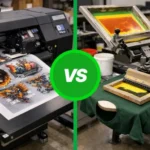
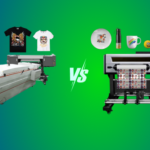
UV DTF vs DTF: Side-by-Side Comparison
Printing Process and Workflow
- DTF, direct to film printing with dtf inks, adhesive film bond, and a heat workflow using a heat press.
- UV DTF, uv printing with uv curable inks, built in uv lamps, and decal style application that skips fabric press.
Ink and Consumables
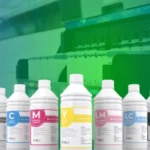
- DTF, dtf ink is water based; you add dtf powder and b film or ab film depending on stack.
- UV DTF, uv ink and varnish form a rigid film that adheres when applied to the product.
Substrate Compatibility
- DTF excels on garments and soft goods.
- UV DTF excels on hard surfaces such as glass, stainless, coated plastics, and powder coat.
- If you need both, consider combining uv dtf for bottles and dtf for apparel in the same order.
Production Speed
- Traditional dtf adds curing time but batches well for apparel lines.
- UV dtf offers higher production speed for decals since prints are cured instantly on printed film.
Durability
- DTF holds up to repeated washes when pressed correctly.
- UV DTF is scratch resistant and chemical tolerant on the right coatings.
Equipment Costs
- Dtf printers range widely by width and automation; entry is accessible.
- UV printers and uv dtf printers cost more, yet pay off on premium decal work with high productivity.
Table, UV DTF vs DTF
| Criteria | DTF | UV DTF |
| Primary use | Apparel, textiles | Hard goods, decals |
| Ink type | water based pigment inks | uv curable uv inks |
| Heat | Required heat press | No heat on product |
| Feel | Softer print feel | Rigid, glossy finish |
| Speed | Batch friendly | Fast decals, uv dtf skips fabric steps |
| Substrates | t shirts, garment industry | Bottles, mugs, laptops, metal |
| Durability | Wash durable | scratch resistant on correct coatings |
| Learning curve | Press settings, peel timing | Surface prep, application technique |
Use Cases and Practical Applications
- Apparel brands, choose dtf printing to decorate mixed fabric lines with consistent color on lights and dark fabrics.
- Drinkware sellers, choose uv dtf to apply decals to coated tumblers where unlike dtf, no press is required.
- Promo distributors, run dtf or uv by item, apparel on dtf, swag on uv dtf for a cohesive kit.
- Shops scaling fulfillment, pair custom dtf transfers for shirts with uv dtf transfers for accessories to streamline kitting.
Which One Should You Choose?
Start with your substrate and finish target.
- Choose dtf if you need stretch, soft hand, and full color on fabric without fabric pre like DTG.
- Choose uv dtf if you need decals for hard goods with crisp edges, high accuracy, and vibrant colors.
If your line includes both apparel and accessories, run a hybrid plan. Order dtf transfers wholesale for garments and uv dtf transfers for hard goods, so your logo system stays consistent across all items.
Pros and Cons Summary
DTF, highlights
- Pros, broad material compatibility on textiles, bold colors dtf, strong opacity with white ink, works on dark fabrics, and efficient for variable sizes.
- Cons, needs oven drying or cure, press steps, and dialed peel timing.
UV DTF, highlights
- Pros, perfect for hard surfaces, high quality prints, fast decals, glossy finish, and no heat on the item.
- Cons, rigid feel, not for uncoated textiles, and careful alignment needed on curved items.
Step-by-Step, DTF Printing Process
- Print to dtf film with a profiled dtf printer.
- Apply adhesive powder, shake off extra, and cure.
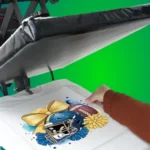
- Prepress garment briefly, then transfer on a heat press.
- Peel per film type, hot, warm, or cold, and post press if needed.
Notes
- Good color comes from the right ICC, stable humidity, and clean nozzles.
- Track temps with a surface probe and calibrate your press.
Step-by-Step, UV DTF Printing Process
- Print on uv dtf film with a uv dtf printer or uv printers using uv curable stacks.
- Varnish layer for depth and protection, sometimes called varnish printing.
- Cure with lamps as part of the pass, then weed and mask if required.
- Apply to the product, burnish, and remove the carrier.
Notes
- Work clean, oils reduce bond on some coatings.
- Test first on powder coat and textured plastics.
Cost, Speed, and Quality Considerations
- DTF vs other printing methods, DTF beats sublimation printing on cotton and beats vinyl on full color.
- UV dtf vs resin decals, UV DTF wins on printing speed and color vibrancy with fewer steps.
- Both methods scale well. DTF shines on size and color variants in one run. UV DTF shines on quick decals across many SKUs.
Quality Control Tips
- For dtf printing process, verify coverage of dtf powder and maintain steady press pressure.
- For uv dtf works, monitor lamp age and intensity to prevent under cure.
- Store transfer film flat and cool.
- Keep a swatch book of fabrics and coatings with settings for repeatability.
Packaging and Fulfillment
- Ship custom dtf transfers flat with interleaves to avoid scuffing.
- Ship uv dtf sheets in rigid mailers so edges do not lift.
- Label with press or application notes to reduce support tickets.
Conclusion
When you weigh uv dtf vs dtf, let the product drive the call. Apparel and soft goods point to dtf printing. Hard goods and decals point to uv dtf printing. Many shops run both and lift margin by quoting the right process for each SKU. If you want a fast start, order dtf transfers wholesale for shirts and uv dtf prints for bottles and mugs so you can fulfill complete kits with a consistent look.
FAQs
What are the benefits of UV DTF?
You get decals for hard surfaces, cured instantly, and scratch resistant edges with vibrant colors and high quality prints. The method offers high productivity and crisp detail on coated items.
Can DTF Work on Hard Surfaces?
Not directly. dtf is engineered for textiles. For tumblers and similar goods, choose uv dtf or pair apparel on dtf with decals on UV.
Which Method Produces Longer-Lasting Prints?
On textiles, dtf offers strong wash durability when pressed correctly. On coated hard goods, uv dtf excels in color vibrancy, abrasion resistance, and stable gloss when applied to the right finish.